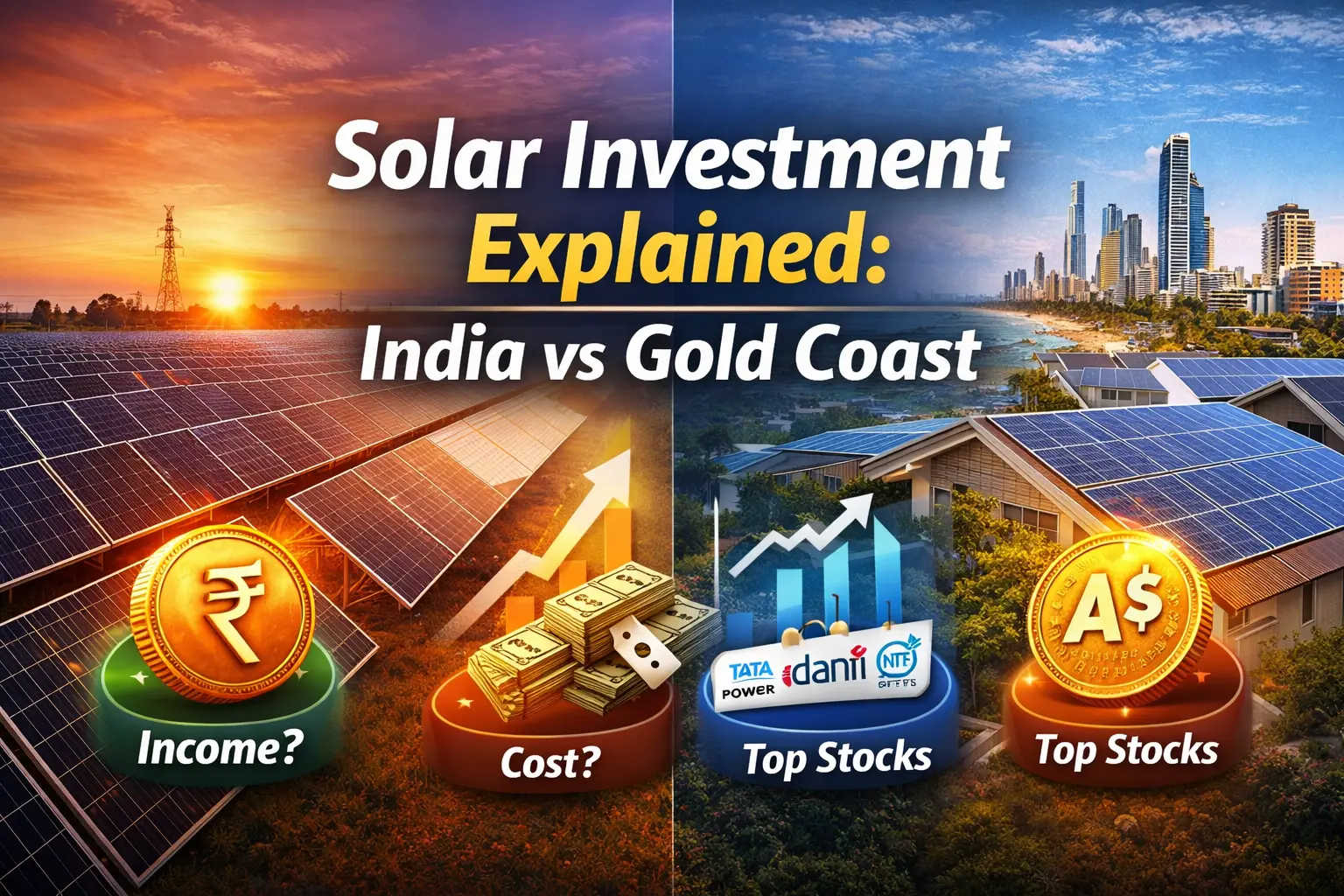
Solar energy is no longer just an environmental choice. For many people, it has become a serious investment option. From large solar farms in India to rooftop systems in Australia’s Gold Coast, investors want clear answers: How much does it cost? How much can it earn? And what rules should you know before installing solar?
Anúncios
This guide breaks everything down in simple language, using verified facts and real-world context. No hype. No exaggerated returns. Just practical insight.
Understanding Solar Investment Today
Solar investment generally falls into three categories:
- Utility scale solar farms (large land based projects, common in India)
- Residential or commercial rooftop solar (popular on the Gold Coast)
- Stock market investments in solar companies
Anúncios
Each works differently, carries different risks, and suits different investors.
Solar Gold Coast Investment: Is It Worth It?
Gold Coast is one of Australia’s most solar friendly regions. It enjoys high solar irradiation, supportive state policies, and strong household adoption of rooftop solar.
Why the Gold Coast Attracts Solar Investors
- High electricity prices make self generation valuable
- Abundant sunlight year round
- Government backed feed in tariffs (varies by retailer)
- Strong resale value for solar equipped homes
Most solar investments on the Gold Coast are rooftop systems, not land-based solar farms.
According to the Australian Government Clean Energy Regulator, rooftop solar can reduce household electricity bills by 40–70%, depending on usage and system size.
Anúncios
Source: cleanenergyregulator.gov.au
How Much Does a 10kW Solar System Cost on the Gold Coast?
As of recent market data:
- 10kW solar system cost: AUD 8,000 to AUD 12,000
- Cost depends on:
- Panel brand
- Inverter quality
- Installation complexity
- Warranty length
A 10kW system typically suits:
- Large households
- Small businesses
- High daytime electricity usage
Payback Period
Most Gold Coast users recover costs in 3 to 5 years, depending on electricity usage and feed-in tariffs.
Source: Australian Energy Council (energycouncil.com.au)
How Much Money Does 1 Acre of Solar Panels Make in India?
India has emerged as a global solar leader due to land availability, high sunlight, and government support.
Typical Output from 1 Acre
- Capacity: ~400 kW to 500 kW (ground-mounted)
- Annual generation: ~6–8 lakh units (kWh), depending on location
Revenue Estimate
At an average power purchase agreement (PPA) rate of ₹2.5–₹3.5 per unit, annual gross revenue can range from:
- ₹15 lakh to ₹25 lakh per year
Costs to Consider
- Land cost (varies by state)
- EPC installation
- Grid connection
- Maintenance and insurance
Net returns depend heavily on state policy and tariff agreements.
Source: Ministry of New and Renewable Energy (mnre.gov.in)
What Are the Top 5 Solar Stocks to Invest in India?
Solar stock investments suit people who want exposure without owning physical assets.
Based on market presence and solar involvement (not guaranteed returns):
These companies operate in:
- Utility scale solar
- Hybrid renewable projects
- Long term government-backed PPAs
⚠️ Important note: Stock investments involve market risk. Always check financial filings and consult a SEBI-registered advisor.
Source: NSE India, company annual reports
What Is the 20% Rule for Solar Panels?
The 20% rule is commonly discussed in residential solar planning.
What It Means
Your solar system size should not exceed 120% of your annual electricity consumption.
Why?
- Prevents oversizing
- Avoids grid export limitations
- Ensures faster payback
Many electricity distributors restrict export capacity to protect grid stability.
This rule is especially relevant in Australia but is also applied informally in Indian rooftop solar programs.
Source: State electricity distribution guidelines (Australia & India)
Comparing India and Gold Coast Solar Investments
| Factor | India (1 Acre Solar) | Gold Coast (10kW Rooftop) |
|---|---|---|
| Initial Cost | High | Moderate |
| Space Required | Large land | Rooftop only |
| Payback Period | 6–8 years | 3–5 years |
| Maintenance | Medium | Low |
| Risk Level | Policy + land | Low to medium |
There is no “better” option only what fits your budget and risk tolerance.
Common Mistakes Solar Investors Make
Even smart investors slip up. Watch out for these:
- Overestimating annual generation
- Ignoring inverter replacement costs
- Assuming fixed government incentives forever
- Oversizing systems beyond actual usage
Solar works best when planned with real consumption data, not assumptions.
Final Thoughts: Is Solar Still a Smart Investment?
Yes but only when approached realistically.
- In India, large-scale solar offers stable, long-term returns with policy awareness.
- On the Gold Coast, rooftop solar is one of the fastest-paying household investments available today.
Solar is not a “get rich quick” scheme. It is a steady, asset backed investment that rewards patience, proper sizing, and credible vendors.
If you treat solar like infrastructure not speculation it can quietly become one of your most reliable investments.
And that’s the kind of return most investors sleep well with. ☀️