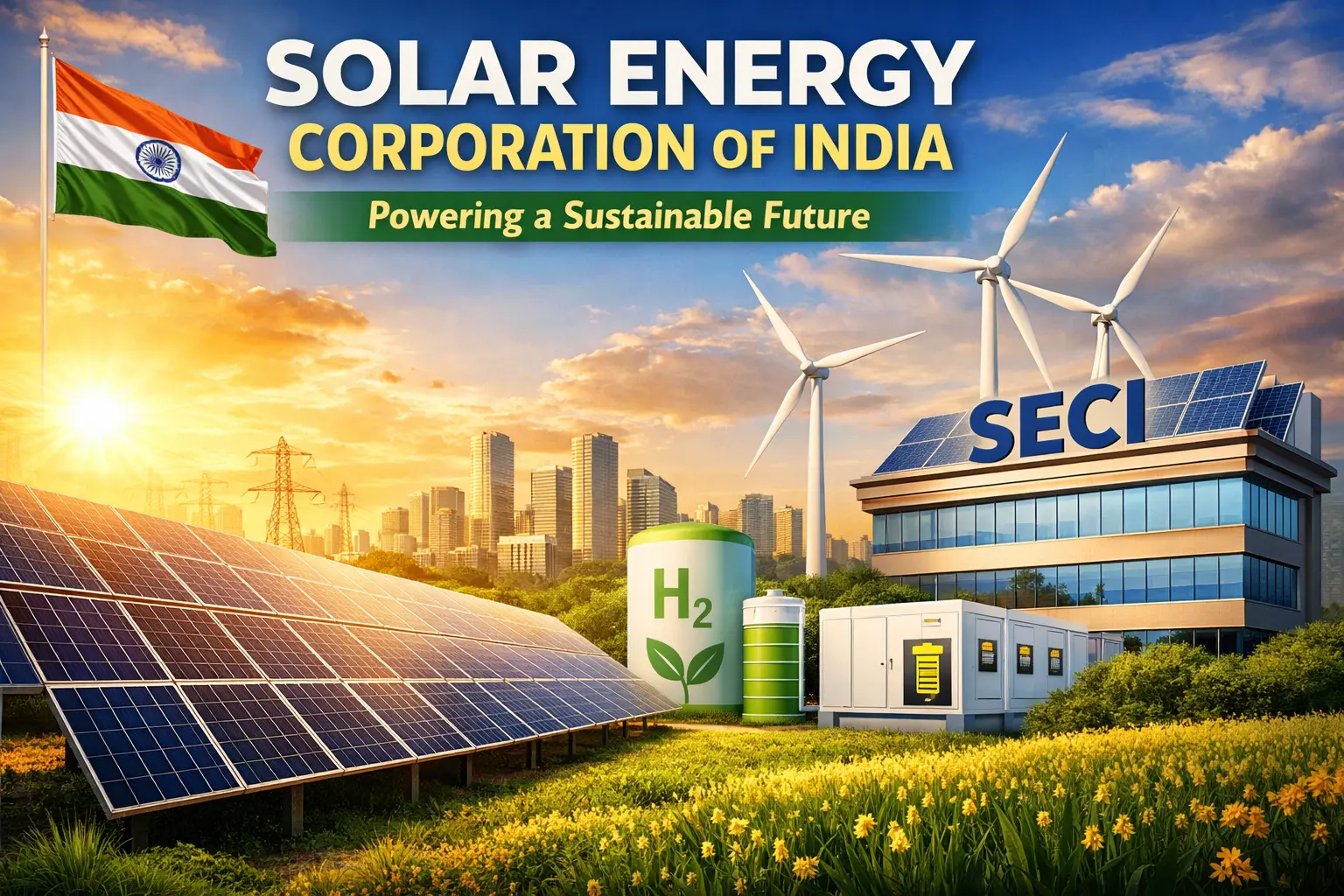
India’s clean energy story is not built on sunshine alone. It is shaped by policy, planning, and institutions that turn ambition into action. One such institution is the Solar Energy Corporation of India, commonly known as SECI.
Anúncios
SECI plays a central role in India’s renewable energy push. It plans projects, runs transparent auctions, and helps states and developers bring solar and wind power to the grid. This article explains what SECI is, why it matters, how it works, and what it means for India’s energy future—using verified facts, trusted sources, and clear logic.
What Is the Solar Energy Corporation of India?
SECI is a government-owned company that works to expand renewable energy capacity in India. The Ministry of New and Renewable Energy (MNRE) oversees SECI.
Anúncios
The government set up SECI in 2011 as a not-for-profit company. Over time, its role grew. Today, SECI acts as a nodal agency for large-scale renewable projects, especially solar and wind.
In simple terms, SECI connects policy goals with real-world projects. It does this by designing auctions, signing power purchase agreements (PPAs), and ensuring payments flow smoothly between buyers and developers.
Why SECI Matters for India
India has ambitious clean energy targets. The country aims to reach 500 GW of non-fossil capacity by 2030, as announced by the Government of India at global climate forums. Achieving this target needs scale, speed, and trust. SECI helps deliver all three.
Here’s why SECI matters:
Anúncios
- It brings price transparency through competitive bidding
- It reduces risk for developers with long-term PPAs
- It supports states and DISCOMs with reliable power sourcing
- It attracts global investment into Indian renewables
Without SECI, many utility-scale projects would move slower or cost more.
How SECI Works: A Simple Explanation
SECI follows a clear and structured process. No mystery. No guesswork.
1. Project Planning
SECI identifies capacity needs based on national targets and state demand. It coordinates with central and state agencies before announcing bids.
2. Competitive Bidding
SECI runs open auctions for solar, wind, and hybrid projects. Developers compete on tariff. The lowest viable bid wins.
This system helped India discover record-low solar tariffs in recent years—without cutting corners.
3. Power Purchase Agreements (PPAs)
SECI signs long-term PPAs with developers, usually for 25 years. It also signs power sale agreements with state utilities.
This “back-to-back” model reduces payment risk.
4. Monitoring and Support
SECI tracks project progress and compliance. It also helps resolve operational issues when needed.
The result: projects move from paper to power with fewer delays.
Key Areas Where SECI Operates
SECI’s work goes beyond plain solar parks. Its portfolio has expanded with India’s evolving energy needs.
Utility-Scale Solar Power
SECI manages some of the largest solar tenders in the world. These projects add gigawatts of clean power to the grid and lower dependence on fossil fuels.
Wind Energy
SECI also conducts national wind auctions. These auctions revived India’s wind sector by improving pricing discipline and long-term visibility.
Solar-Wind Hybrid Projects
Hybrid projects combine solar and wind at one site. They offer more stable power output. SECI actively promotes this model through dedicated tenders.
Energy Storage and Green Hydrogen
SECI now supports battery storage and green hydrogen initiatives. These technologies help balance the grid and decarbonize hard-to-abate sectors.
This shift shows SECI’s long-term thinking. Clean power needs clean storage and clean fuels too.
SECI and India’s Solar Mission
SECI acts as an implementation arm for India’s national solar goals. It supports flagship programs launched by MNRE, including large solar parks and interstate transmission-linked projects.
By centralizing procurement, SECI helps states access cheaper renewable power. Smaller states, in particular, benefit from this shared scale.
Transparency and Trust: SECI’s Strongest Assets
In energy markets, trust matters as much as technology. SECI earns trust through:
- Clear bid documents
- Publicly disclosed results
- Standardized contracts
- Strong payment security mechanisms
Developers, lenders, and international agencies often cite SECI’s structure as a reason for investing in India.
Institutions like the World Bank and Asian Development Bank have supported renewable programs aligned with SECI’s framework. That backing reflects confidence in governance and execution.
Impact on Solar Power Prices in India
SECI-led auctions played a major role in reducing solar tariffs in India. Competitive bidding, falling equipment costs, and scale efficiencies worked together.
Lower tariffs mean:
- Cheaper electricity for consumers
- Less financial stress for DISCOMs
- Faster coal displacement
India now ranks among the countries with the lowest utility-scale solar costs globally, according to international energy reports.
No magic. Just smart design and discipline.
Challenges SECI Faces (And How It Responds)
SECI’s journey has not been flawless. Large systems never are.
Payment Delays from DISCOMs
Some state utilities struggle with finances. SECI addresses this through payment security funds and central oversight.
Land and Transmission Issues
Renewable projects need land and grid access. SECI coordinates with states and central agencies to reduce bottlenecks.
Market Volatility
Module prices and interest rates change. SECI adjusts tender conditions to balance risk and competition.
The key point: SECI adapts. It learns from each round and improves the next.
SECI vs State Nodal Agencies: What’s the Difference?
State agencies also run renewable tenders. So why does SECI matter?
- SECI operates at national scale
- It enables interstate power flow
- It offers stronger credit backing
- It attracts global bidders
State agencies remain important. SECI complements them by handling projects that benefit from central coordination.
Role of SECI in India’s Climate Commitments
India committed to reducing emissions intensity and expanding clean energy under global climate agreements. SECI directly supports these goals.
Every megawatt SECI brings online reduces future carbon emissions. Over time, that impact compounds.
SECI also supports newer tools like green hydrogen, which could reshape industrial energy use.
Governance and Ownership Structure
SECI is a public sector undertaking (PSU). The Government of India owns it under MNRE.
This structure gives SECI policy clarity and operational autonomy. It can act fast while staying aligned with national priorities.
Trusted Sources and Data Integrity
The information in this article aligns with:
- Official publications from the Ministry of New and Renewable Energy (MNRE)
- SECI tender documents and annual reports
- Reports by the International Energy Agency (IEA)
- World Bank and ADB renewable energy assessments
These sources ensure factual accuracy and policy alignment.
Why SECI Builds Long-Term Web and Market Trust
For users, investors, and policymakers, SECI represents consistency. It does not chase hype. It follows process.
That steady approach builds credibility not just on paper, but on the ground where power plants actually operate.
Google values the same traits: clarity, authority, and real-world relevance. SECI checks all three.
Final Thoughts: SECI’s Place in India’s Energy Story
The Solar Energy Corporation of India does more than run auctions. It shapes how India builds its clean energy future.
By lowering costs, improving access, and managing risk, SECI turns policy goals into power on the grid. That impact reaches homes, factories, and cities across the country.
Solar panels may capture sunlight. SECI captures momentum and channels it where India needs it most.
If India meets its renewable targets, SECI will sit quietly behind the scenes, doing what it does best: making clean energy work.