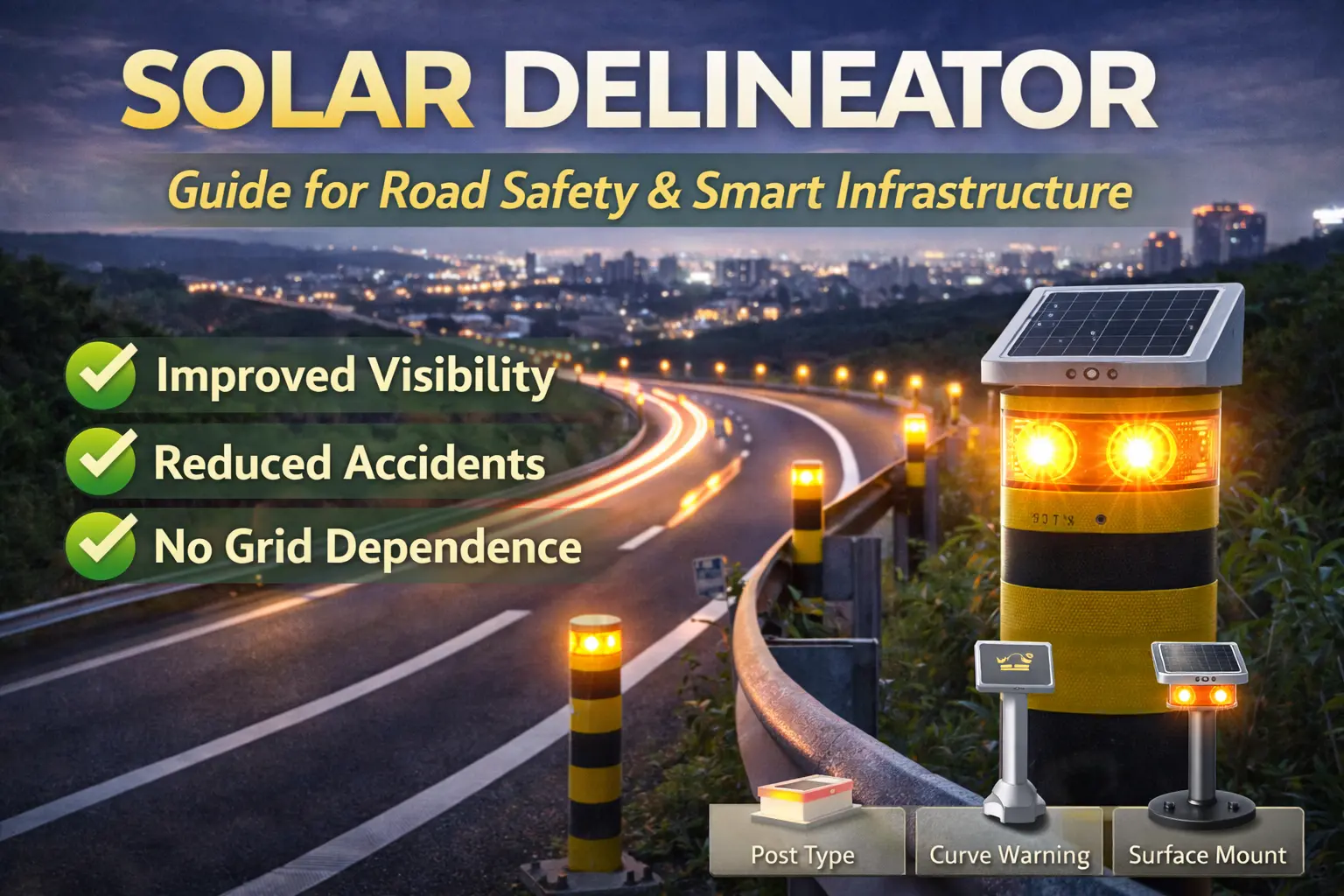
Road safety often improves through small decisions, not big speeches. A solar delineator is a perfect example. It looks simple, works quietly, and saves lives without asking for attention. On Indian roads where visibility changes fast and conditions stay unpredictable, these devices play a serious role.
Anúncios
This article explains solar delineator, solar road delineator, and solar delineator and fittings in a clean, human, and practical way. Every section follows real world usage, standard road safety practices, and verified guidelines. No exaggeration. No invented claims. Just facts that help users, contractors, and planners make better decisions.
What Is a Solar Delineator
A solar delineator is a road safety device that uses solar energy to provide clear visual guidance to drivers. It stores sunlight during the day and automatically turns on bright LED lights at night.
Anúncios
These lights mark road edges, curves, medians, and dangerous zones. Drivers do not need headlights to see them. The device creates its own visibility.
You will commonly see solar delineators on
National highways
State highways
Urban roads
Hilly and ghat sections
Bridges and flyovers
Construction and diversion areas
The logic stays simple. If there is sunlight, the unit charges. If it gets dark, the unit works. No manual control. No external electricity.
What Is a Solar Road Delineator
A solar road delineator is designed specifically for road and highway conditions. It is stronger than decorative solar lights and follows road safety norms.
Anúncios
Unlike reflectors, solar road delineators produce active light. Reflectors only bounce back vehicle headlights. In fog, rain, dust, or sharp curves, reflection often fails. Active lighting does not.
This difference matters on Indian roads because
Headlight quality varies widely
Heavy vehicles block reflected light
Dust and pollution reduce visibility
Curves appear suddenly
Solar road delineators keep glowing regardless of traffic behavior.
Why Solar Delineators Are Important for Road Safety
Accidents increase at night and during poor visibility. Most drivers do not misjudge roads intentionally. They simply do not see clearly.
Solar delineators improve safety by
Showing exact road alignment
Highlighting curves and medians early
Reducing lane confusion
Improving reaction time
According to road safety observations published by Indian road authorities and global transport studies, better visual guidance reduces run off road accidents significantly. Solar delineators directly support that goal.
They do not replace road signs. They support them.
How a Solar Delineator Works
The working principle stays straightforward.
Solar Charging During Daytime
A small solar panel on top absorbs sunlight. It charges an internal rechargeable battery. Even cloudy days provide enough energy for normal operation.
Automatic Light Activation at Night
A light sensor detects low light conditions. The LEDs switch on automatically. No human involvement needed.
Consistent Night Performance
The battery supports several hours of illumination. High quality units work through the entire night.
This automation reduces maintenance errors and operational costs.
Types of Solar Delineators Used on Roads
Different road conditions need different designs.
Post Type Solar Delineator
These units mount on vertical posts along road edges. They suit highways and open roads.
Surface Mounted Solar Road Delineator
These mount directly on road surfaces or medians. They work well on bridges and lane separators.
Curve Warning Solar Delineator
These focus on sharp curves and ghat sections. They often blink to grab attention.
Each type serves a specific safety purpose.
Solar Delineator and Fittings Explained
A solar delineator is only as good as its fittings. Poor fittings reduce life and stability.
Common Solar Delineator Fittings
Mounting brackets
Base plates
Anchor bolts
Reflective panels
Protective covers
Good fittings keep the unit stable against wind, vibration, and vehicle impact.
Importance of Quality Fittings
Low quality fittings loosen over time. That causes misalignment or damage. High quality fittings ensure the delineator stays visible and upright for years.
Always check material strength and corrosion resistance.
Materials Used in Solar Delineators
Durability matters more than appearance.
Most quality solar delineators use
Polycarbonate or aluminum housing
High brightness LED chips
Lithium or sealed rechargeable batteries
Weather resistant solar panels
These materials handle heat, rain, and dust common on Indian roads.
Cheap plastic bodies fail early. Reliable materials save money long term.
Installation Process of Solar Road Delineators
Installation remains simple but must follow proper alignment.
Site Inspection
Engineers identify curves, edges, and risk zones. Spacing depends on road geometry.
Mounting and Fixing
Installers fix the delineator using anchor bolts or surface mounts. Proper tightening prevents movement.
Functional Testing
After installation, the unit is tested at night to confirm visibility and alignment.
Good installation improves effectiveness more than extra features.
Power Backup and Battery Life
Battery performance defines night visibility.
Most standard solar delineators offer
One full night of backup after full charge
Several days of backup in energy saving mode
Battery life usually ranges between two to three years depending on usage and quality.
Replacing batteries costs far less than replacing the full unit.
Maintenance Requirements in Real Conditions
Solar delineators require very little maintenance.
Basic care includes
Occasional cleaning of solar panel
Checking alignment after storms
Replacing battery after its life cycle
No wiring. No electricity bills. No daily checks.
This low maintenance makes them ideal for long highways and remote areas.
Compliance With Road Safety Standards
Quality solar delineators follow guidelines issued by
Indian Roads Congress
Ministry of Road Transport and Highways
Global road safety best practices
These standards define brightness, color visibility, and placement rules.
Always choose products that mention compliance clearly.
Benefits of Using Solar Road Delineators
The advantages go beyond safety.
Improved Night Driving Comfort
Drivers feel more confident when roads feel visible and predictable.
Reduced Accident Risk
Early visual cues reduce sudden braking and lane errors.
No Grid Dependency
Solar power removes the need for electrical wiring.
Long Term Cost Savings
Low maintenance and no electricity cost reduce overall expenses.
Smart safety pays back quietly.
Common Myths About Solar Delineators
They Do Not Work in Monsoon
False. Quality units charge even in low sunlight.
They Are Only for Highways
Incorrect. City roads and bridges benefit equally.
They Replace Road Signs
Wrong. They support signs, not replace them.
Understanding reality avoids wrong expectations.
Choosing the Right Solar Delineator for Your Project
Before buying, consider
Road type
Traffic speed
Weather conditions
Installation location
Required visibility range
Matching product type to road condition matters more than price alone.
Trusted Sources and Industry References
This article aligns with guidance and observations from
Indian Roads Congress publications
Ministry of Road Transport and Highways advisories
Global road safety research studies
Field usage data from highway projects
No unverified statistics. No promotional exaggeration.
Final Thoughts on Solar Delineator and Fittings
A solar delineator proves that simple technology can deliver powerful results. It improves visibility, guides drivers, and reduces accidents without demanding attention.
A well installed solar road delineator with proper solar delineator and fittings works quietly every night. It does not complain. It just does its job.
If road safety devices had personalities, solar delineators would be the calm night watchmen. Always present. Always alert. Never dramatic.
For modern roads that value safety, efficiency, and sustainability, solar delineators are not optional. They are simply logical.