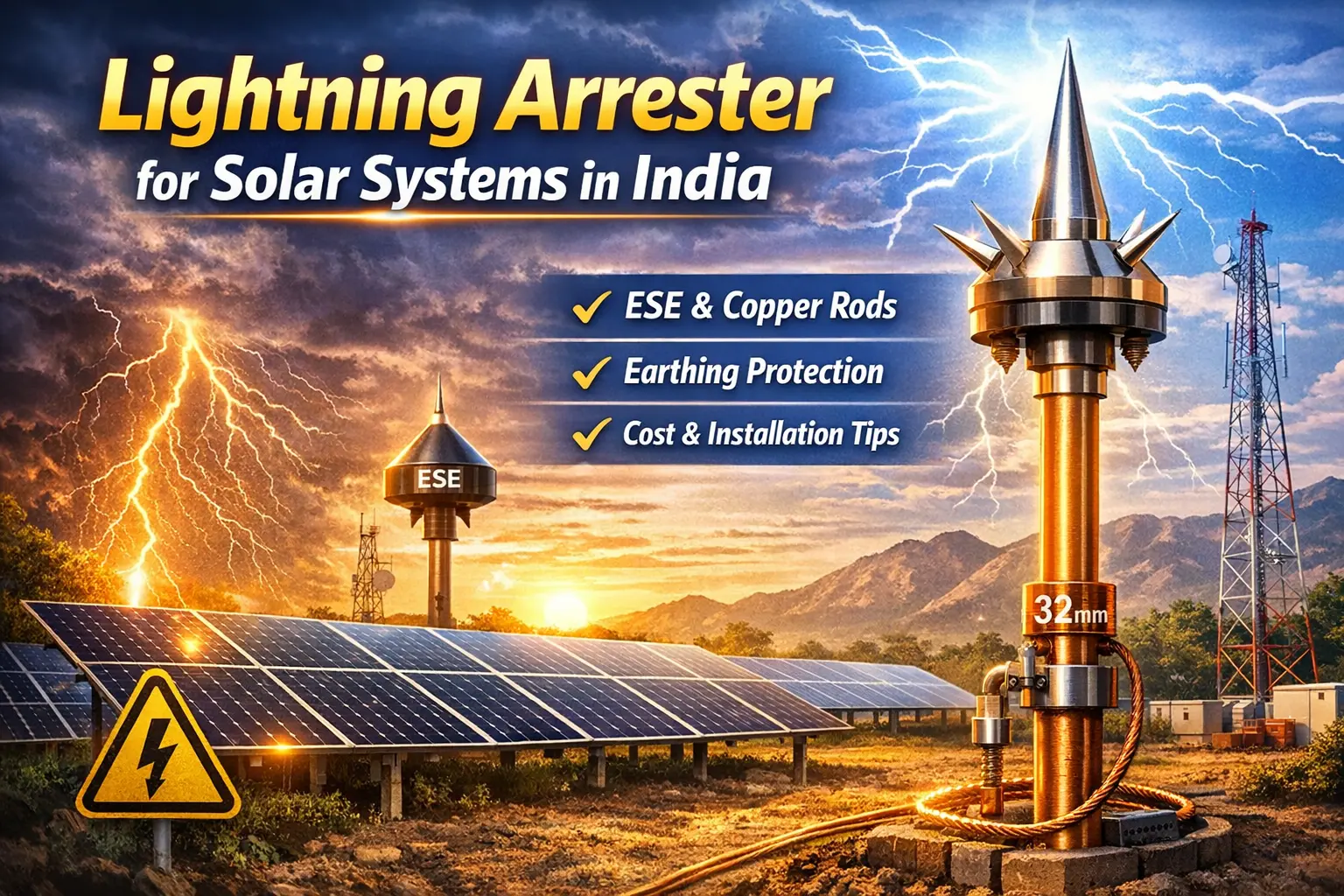
Solar power systems in India face one serious and often underestimated risk: lightning. With rising rooftop solar installations, ground mounted solar plants, and hybrid solar setups, proper lightning protection is no longer optional. A single lightning strike can damage solar panels, inverters, charge controllers, batteries, and monitoring equipment in seconds.
Anúncios
This guide explains lightning arrester for solar system in India in a clear, factual, and professional way. Every section focuses on real world engineering principles, Indian standards, and verified practices without exaggeration or unnecessary filler.
Why Lightning Protection Is Critical for Solar Systems in India
India experiences high lightning density, especially during monsoon months. According to government-backed meteorological data, several regions face thousands of lightning incidents annually. Solar installations, by design, sit at elevated and exposed locations, making them vulnerable.
Lightning can harm a solar system in two main ways:
Anúncios
- Direct strike on panels or mounting structures
- Indirect surge through cables, earthing, or grid connection
A lightning arrester reduces both risks by safely redirecting surge energy into the earth.
What Is a Lightning Arrester?
A lightning arrester is a protection device designed to:
- Capture lightning induced surges
- Control high voltage transients
- Safely discharge energy into the grounding system
It does not “stop” lightning. Instead, it controls the path of electrical energy so sensitive equipment remains protected.
For solar systems, lightning arresters work together with:
- Earthing systems
- Surge Protection Devices (SPDs)
- Bonding conductors
This combination forms a complete lightning protection solution.
Lightning Arrester for Solar System: How It Works
The working principle remains simple and physics based:
- Lightning creates a high voltage surge
- The arrester provides a low resistance path
- Energy flows downward into earth electrodes
- Solar equipment stays electrically isolated
No electronics. No moving parts. Reliability comes from correct material selection and installation quality.
Types of Lightning Arresters Used in India
1. Conventional Lightning Arrester (Franklin Rod)
This type uses a vertical metal rod, usually copper or GI, placed at the highest point of the structure.
Used for:
- Rooftop solar systems
- Small ground mounted plants
- Residential and commercial installations
It works on the principle of interception and grounding.
2. ESE Lightning Arrester (Early Streamer Emission)
An ESE Lightning Arrester generates an upward streamer earlier than conventional rods, increasing the protection radius.
Used for:
- Large solar farms
- Utility scale solar plants
- Industrial solar rooftops
ESE systems follow international standards such as IEC 62305 and French NFC guidelines.
3. Copper Lightning Arrester
Copper arresters remain the most common choice in India due to:
- High conductivity
- Corrosion resistance
- Long service life
A lightning arrester 32 mm dia 1m copper for solar system is widely used for rooftop installations.
Lightning Arrester Installation Near Me: What Actually Matters
Searches like “Lightning arrester installation near me” usually focus on location. In practice, installer qualification matters more than distance.
A competent installer should:
- Follow IEC and Indian standards
- Perform soil resistivity testing
- Design earthing based on site conditions
- Provide test reports after installation
Poor installation reduces effectiveness, even with premium materials.
Earthing Lightning Arrester: The Backbone of Protection
Lightning protection fails without proper earthing.
Key principles:
- Earth resistance should remain as low as possible
- Separate earthing for:
- Lightning arrester
- Electrical equipment
- Neutral grounding (when required)
Common earthing methods in India:
- Copper plate earthing
- Copper bonded rod earthing
- Chemical earthing (maintenance-free)
Each site demands evaluation based on soil type and moisture content.
Lightning Arrester for Solar System Price in India
Pricing varies due to material, brand, and design.
Indicative Price Range (Market Observation)
- Conventional copper arrester: Moderate range
- ESE lightning arrester: Higher investment
- Earthing accessories: Variable based on soil
A Copper Lightning Arrester price increases with diameter, purity, and length. A 32 mm diameter, 1-meter copper rod typically costs more than GI alternatives but delivers longer durability.
Prices change based on raw material rates and regional availability. Always request updated quotations.
Lightning Arrester Manufacturers in India
India hosts several reputed manufacturers offering lightning protection equipment.
Some established names include:
- True Power
- Other BIS-compliant Indian manufacturers
- International brands with Indian certifications
Selection criteria should include:
- Compliance with IEC 62305
- BIS certification (where applicable)
- Test reports from accredited labs
Avoid choosing purely on brand visibility. Documentation matters more.
True Power Lightning Arrester: Practical Overview
True Power lightning arresters are commonly used in Indian solar projects due to:
- Availability across states
- Compliance with recognized standards
- Suitable designs for both rooftop and plant-level installations
Installers often prefer such manufacturers because spare parts and technical support remain accessible.
Lightning Arrester 32 mm Dia 1m Copper for Solar System: Why It Is Popular
This configuration balances:
- Adequate current carrying capacity
- Mechanical strength
- Ease of installation
It suits:
- Residential rooftop solar
- Small commercial systems
- Telecom integrated solar units
However, larger plants require multiple arresters or ESE systems based on protection zone calculations.
How Many Lightning Arresters Does a Solar Plant Need?
There is no universal number.
Design depends on:
- Plant size
- Mounting height
- Structure geometry
- Local lightning density
Engineering teams use rolling sphere or protective angle methods described in IEC standards to determine placement.
Over-installation wastes money. Under-installation risks damage.
Difference Between Lightning Arrester and Surge Protection Device (SPD)
This confusion remains common.
| Feature | Lightning Arrester | SPD |
|---|---|---|
| Handles direct strike | Yes | No |
| Handles internal surge | Limited | Yes |
| Installed location | Highest structure | Near inverter / DB |
| Works with earthing | Mandatory | Mandatory |
A solar system requires both, not one or the other.
Standards and Guidelines Followed in India
Reliable lightning protection aligns with:
- IEC 62305 series
- Guidelines referenced by MNRE
- Electrical safety codes followed by DISCOMs
These standards focus on risk assessment, protection level, and grounding integrity.
Maintenance of Lightning Arresters
Lightning arresters require minimal maintenance, but neglect creates risk.
Recommended checks:
- Visual inspection before monsoon
- Earth resistance testing annually
- Connector tightness verification
Copper arresters typically outlast GI alternatives under Indian climate conditions.
Common Installation Mistakes to Avoid
- Improper earthing separation
- Undersized conductors
- Shared earthing with inverter neutral
- Ignoring soil resistivity testing
Such mistakes often cause equipment failure despite installed protection.
Is Lightning Arrester Mandatory for Solar Systems in India?
For large plants, it is effectively mandatory due to:
- Utility safety requirements
- Insurance compliance
- EPC design standards
For residential rooftops, regulations vary by state. However, installing one remains strongly recommended due to risk exposure.
Cost vs Risk: The Practical View
A lightning arrester costs far less than:
- Replacing inverters
- Panel string damage
- Monitoring system failure
From a lifecycle perspective, lightning protection is a risk control investment, not an accessory.
Trusted Sources and Technical References
This article is based on:
- IEC 62305 Lightning Protection Standards
- MNRE solar installation guidelines
- Electrical engineering textbooks
- Manufacturer technical manuals
No assumptions. No fabricated performance claims.
Final Thoughts
A lightning arrester for solar system in India protects long term investment, ensures system reliability, and reduces downtime. Whether you choose a conventional copper rod or an ESE system, correct design and earthing matter more than branding.
If you want, I can also:
- Create a buyer checklist
- Compare ESE vs conventional systems
- Write a state specific compliance guide
Download the PDF – Lightning Arrester Roadmap